
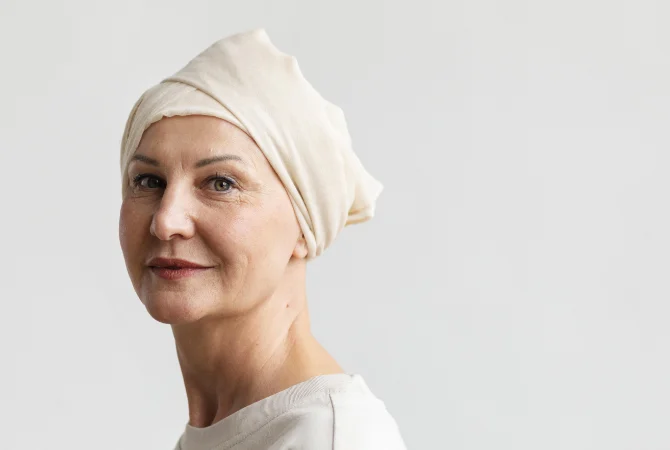
Being told you have breast cancer can make the next few days feel like a blur. You’ve likely been through a number of scans, a biopsy and an anxious wait for results, and given a lot of information that is hard to take in all at once.
So, what now? The first steps are about understanding what has been found, meeting the specialists that will guide your care and starting to build a plan that aligns with your diagnosis, health needs and personal circumstances.
Hunter Valley Oncology provides specialist oncology care for women with breast cancer across the Hunter region. Our team can help clearly explain your diagnosis and treatment options and are here to support you through treatment and after-care.
Step 1
Understanding your breast cancer diagnosis
Breast cancer is not one single disease. Two people diagnosed with breast cancer can need very different treatment because the characteristics of their cancers are different.
Pathology provides information about the type, size and grade of the breast cancer, if lymph nodes are involved and receptor status, including HER2 and hormone status.
These results help guide which treatments are included and the order they are given. Depending on the characteristics and stage of the cancer, you may have surgery first or drug treatment before surgery, including chemotherapy, endocrine or hormone therapy, targeted therapy or immunotherapy.
Your Hunter Valley Oncology team will explain anything you are unsure about and encourage you to ask questions. It can also be useful to keep a copy of your pathology report to refer back to.
Step 2
Know who is involved in your breast cancer care
Breast cancer treatment involves several specialists for the different parts of your care. Each has a different role and your team could include a:
- Breast surgeon
- Medical oncologist
- Radiation oncologist
- Breast care nurse
- Radiologist
- Pathologist
- Allied health professionals
A medical oncologist specialises in cancer treatments that work throughout the body, including chemotherapy, endocrine therapy, targeted therapy and immunotherapy. They also monitor your response to treatment, manage side effects and work with the other specialists involved in your care.
Your GP remains an important part of the team, supporting your general health, referrals and ongoing care.
Step 3
Find out if you need more tests
A diagnosis does not always mean treatment starts immediately. Your doctors may need more information before recommending a personalised treatment plan, including further imaging, blood tests, genetic testing or other investigations.
At Hunter Valley Oncology, your care could also be discussed at a multidisciplinary team meeting, where specialists review the available information and discuss treatment options.
This does not mean your cancer is more serious. It allows specialists from different areas of breast cancer care to contribute to your treatment planning.
Step 4
Treatment discussions
“What treatment will I need?” is one of the most common questions after a breast cancer diagnosis, but there is no single treatment path that applies to everyone.
Your treatment plan could involve surgery, chemotherapy, radiation therapy, endocrine therapy, targeted therapy or immunotherapy. Some people need one type of treatment and others may need several treatments at different stages.
Your Hunter Valley specialist will explain what they recommend, why they recommend it and how each part fits into your wider treatment plan.
Step 5
Ask any questions
It can be difficult to think of questions while you are still processing your diagnosis. Write them down beforehand and consider bringing a partner, family member or friend who can listen and take notes.
At Hunter Valley Oncology, our priority is that you feel supported and understand the information you have been given to be able to make informed decisions about your care. We take the time to explain your diagnosis and treatment details, but other useful questions are:
- What side effects should I expect?
- What symptoms or side effects should prompt me to call the care team?
- Will I receive a written treatment plan?
- Will treatment affect my fertility or menopause?
- Should I continue taking my current medicines and supplements?
- Are there any medicines, supplements or activities I should avoid?
- Who should I contact if I have questions between appointments?
Step 6
Give yourself the space to make treatment decisions
It is common to leave a breast cancer diagnosis feeling that everything needs to happen immediately.
Some cancers do require treatment to begin promptly. In other situations, there is time to understand the recommendation, ask further questions and consider your options before making a decision.
Ask your treating team how soon a decision is needed for your particular cancer and what the recommended timeframe means for your treatment.
Having time to make an informed decision is not the same as unnecessarily delaying care. Your oncologist will let you know where there is more time to think over your options and when treatment timing is urgent.
Step 7
Tell us what matters to you
Breast cancer treatment affects more than your medical appointments. Work, children, caring responsibilities, transport, finances, fertility, menopause, body image and treatment side effects can all become important considerations.
Tell your care team what matters to you early so they can discuss available support or connect you with relevant health professionals and services. This can include breast care nurses, psychologists, social workers, exercise professionals, dietitians, cancer support organisations and your GP.
Step 8
Support planning and preparation
It can also help to prepare and plan practical support before treatment starts such as:
- Transport to and from treatment appointments
- Help with children or other dependants
- Help at home with meals, shopping, cleaning, pets or yard work
- Preparing meals and household essentials in advance
- Time away from work or temporary changes to your duties
- Making frequently used items easier to reach at home
- Looking into financial and practical support, including insurance, Centrelink entitlements or other assistance
- Talking to reliable family and friends about when you may need help
- Planning self-care and gentle movement during or after treatment
A little preparation before treatment starts can make the treatment period easier to manage, reducing day-to-day pressures and giving you more time and energy to put towards your care and recovery.
What to expect at your first oncology appointment
Your first appointment at Hunter Valley Oncology brings together the different pieces of your diagnosis and what they mean for your care.
Your oncologist will review your diagnosis and test results, medical history, current medications and relevant family history. They will discuss the treatment options that apply to your cancer and what is likely to happen next.
If more information is needed before a complete treatment plan can be made, further testing or another appointment may be arranged.
It can help to bring your referral, recent imaging and reports, pathology results, a list of current medications, your questions and a family member, partner or trusted friend for support.
Breast Cancer Diagnosis and Oncology Care in the Hunter Region
If you have recently been diagnosed with breast cancer, you don’t need to understand everything at once.
Hunter Valley Oncology provides specialist medical oncology care for patients with breast cancer in the Hunter region, with consultations available across Maitland, Newcastle, Nelson Bay, Singleton and Gateshead.
To arrange a consultation with Hunter Valley Oncology, speak with your GP, breast surgeon or other referring specialist about a referral.
This article is for general information and educational purposes only. It is not a substitute for professional medical advice, diagnosis, or treatment, and does not establish a doctor-patient relationship. All medical procedures carry risks, and outcomes vary between individuals. Always seek the advice of your GP, specialist, or another appropriately qualified health professional with any questions you may have regarding a medical condition or treatment. Where further or specialised care is required, your treating practitioner can provide referral.
